

Service Dog Training
-
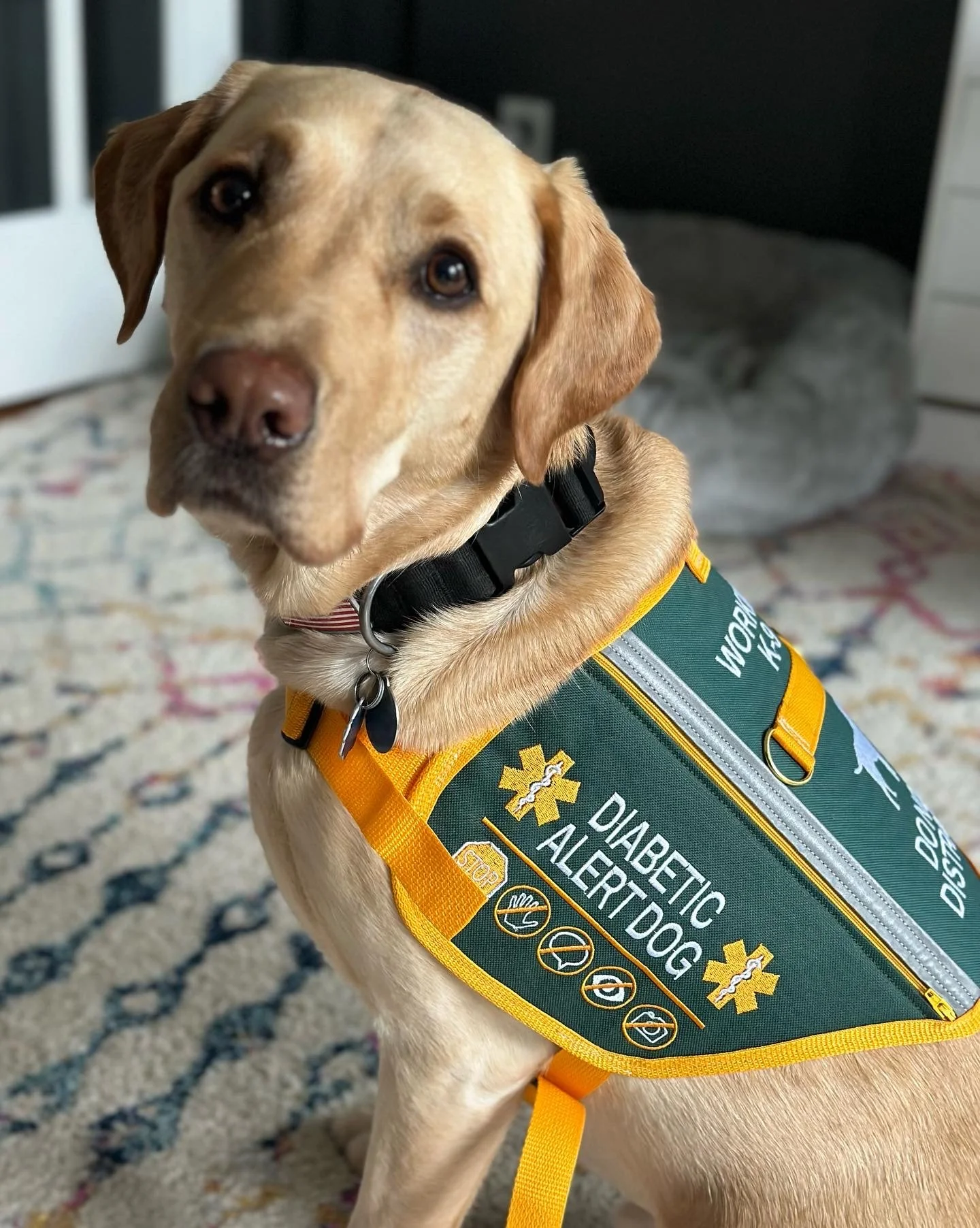
Our Service Dog Training program focuses on teaching the skills needed for a dog to perform specific disability-related tasks and behave appropriately in public environments. Training is individualized based on the dog's current abilities, the handler's needs, and the tasks being developed. We offer training for Diabetic Alert Dogs and Psychiatric Alert Dogs.
Consultation required. Because service dog training is highly individualized, we begin with a consultation to discuss your needs, your dog's current skills, and whether our program is an appropriate fit.Training Scope:
Scent & Alert Training: Developing reliable responses to specific scents, including scent discrimination and alert behaviors for diabetic or psychiatric-related needs.
Task Training: Teaching and strengthening specific tasks that help mitigate a disability, based on the handler's individual needs.
Public Access Training: Practicing appropriate behavior in public settings, including ignoring distractions, settling quietly, maintaining focus, and navigating different environments.
Skill Reliability: Building a strong foundation of cues such as sit, down, stay, recall, heel/loose-leash walking, and leave-it.
Environmental Confidence: Helping your dog remain calm and focused in new places, around different surfaces, sounds, people, and other distractions.
Handler Training: Teaching handlers how to communicate with their dog, reinforce desired behaviors, practice tasks, and maintain skills between sessions.
Proofing & Generalization: Taking learned skills into different environments and gradually increasing distractions so behaviors become more consistent and reliable.
Maintenance Training: Continuing to practice and strengthen working skills as your dog's responsibilities and environments change.
Session Info: Training sessions run up to 60 minutes and take place at the required location (at home, in stores, parks etc.). In-person sessions cost $175 and online sessions cost $140.
Multiple Sessions: Discounted training packages are available here
Training plans are customized to each team, as not every dog or handler will require every component listed above.
-
Service dog training is highly individualized, and understanding what qualifies as a service dog under the Americans with Disabilities Act (ADA) is an important part of the process.
Under the ADA, a service dog is a dog individually trained to perform work or tasks directly related to a person's disability. Dogs whose sole role is providing comfort or emotional support are not considered service animals under the ADA. (ada.gov)
Our training focuses on helping you and your dog develop the practical skills needed for service work, including task training, reliable responses, public access skills, and working calmly and appropriately in a variety of environments.
A few things to know:
We do not provide Emotional Support Animal (ESA) training. Emotional support animals provide comfort or emotional support through their presence and do not perform trained disability-related tasks. Our service dog program is specifically focused on dogs trained to perform tasks related to a handler's disability.
You train with your dog. We provide guidance and hands-on training to help you develop your dog's skills rather than providing or placing a fully trained service dog.
There is no ADA-required certification or registration. The ADA does not require service dogs to have a special ID card, certification, or registration, and businesses generally cannot require documentation of a service dog's training as a condition of access. Once a dog and handler team has successfully completed our training program and demonstrated the skills covered in their individualized training plan, KTK will provide a certificate recognizing completion of the program. This is a KTK-issued certificate of completion and is not an ADA certification or government-issued service dog credential.
Service dogs perform disability-related tasks. To qualify as a service animal under the ADA, a dog's trained work or tasks must be directly related to the handler's disability. Public access manners and general obedience are important, but they are not a substitute for disability-related task training. (ada.gov)
Public access is about reliable behavior. Training can include helping your dog remain under control, focused on their handler, and appropriately behaved in public environments while navigating people, animals, sounds, and other distractions. The ADA requires service animals to be under their handler's control, with limited exceptions related to a person's disability or the dog's task performance. (ada.gov)
Not every dog is suited for service work. Service dog training requires appropriate behavior, reliability, environmental stability, and the ability to consistently perform the necessary tasks. Training is individualized, and beginning a training program does not guarantee that a particular dog will ultimately be suitable for service work.
For more information about service animals and the ADA, visit the U.S. Department of Justice ADA.gov — Service Animals Requirements.